01
Homeowners
Understand the condition of an installation, particularly before planned improvements or after many years without inspection.

An Electrical Installation Condition Report—normally called an EICR—is a structured inspection and test of the fixed electrical installation.
It can identify defects, deterioration, limitations and recommended improvements, giving you a clearer understanding of the condition of the installation.
The result is explained in straightforward language and supported with photographs where useful.
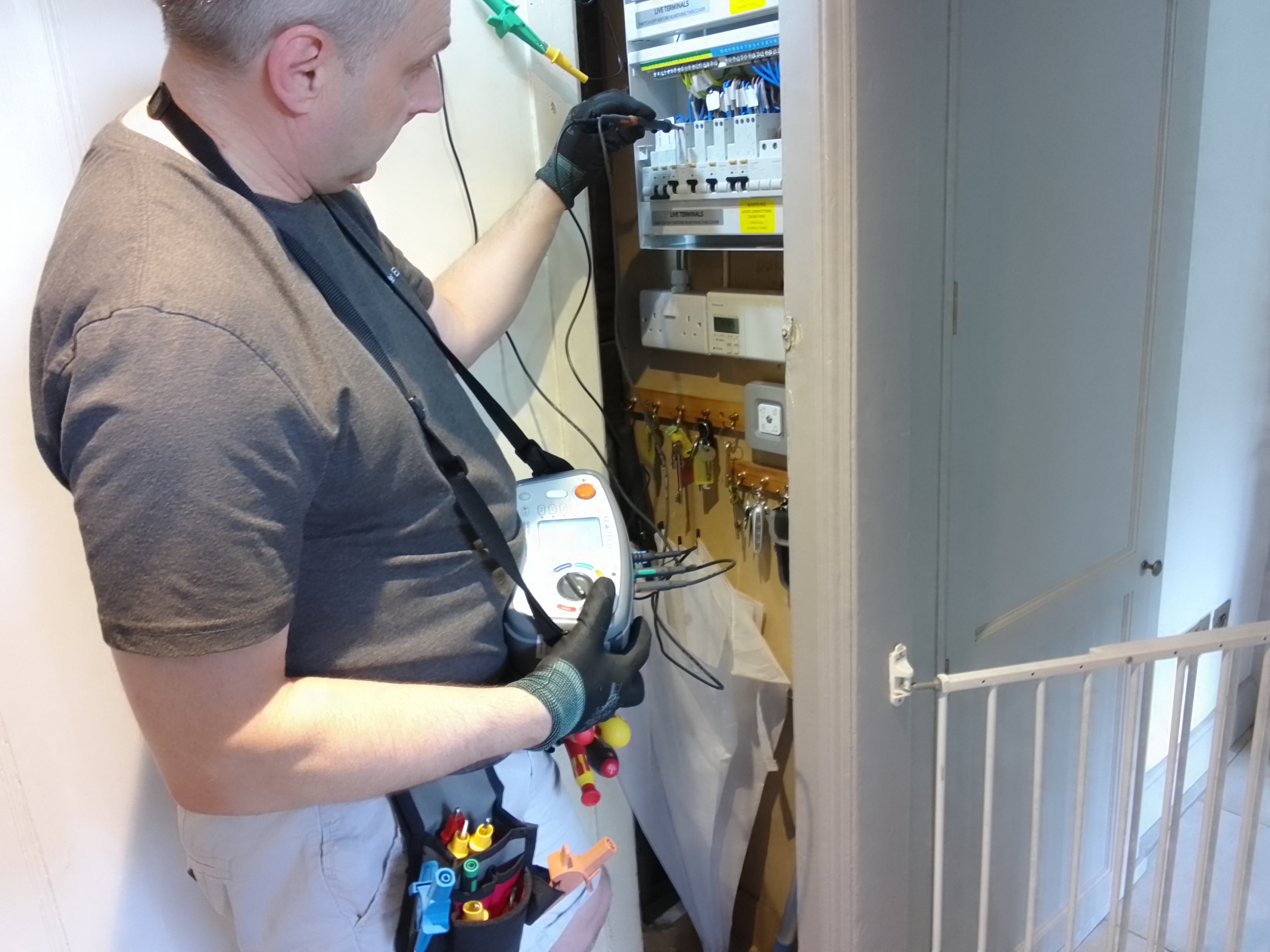
The reason for an inspection can vary. It may be a routine check, a change of occupancy, a property purchase or concern about an older installation.
Understand the condition of an installation, particularly before planned improvements or after many years without inspection.
Support electrical-safety responsibilities and obtain a clear, documented assessment for rental properties.
Obtain more information about the electrics before or shortly after taking ownership of a property.
Review the fixed electrical installation in shops, offices, workshops and other smaller commercial premises.
The extent of the inspection depends on the property, accessibility, number of circuits and any agreed limitations.
Discuss the property, any known concerns, access requirements and the scope of the inspection.
Inspect accessible parts of the installation, consumer unit, accessories, earthing and bonding arrangements.
Carry out tests suited to the installation and circuits, recording the measured results.
Record observations, explain the findings and identify any recommended next steps.
Some tests require circuits or the installation to be safely isolated. Safe-isolation procedures and suitable test equipment are used before covers are removed or conductors are accessed. The likely disruption will be discussed before testing begins.
The inspection considers the fixed wiring and protective arrangements throughout the property, subject to access and agreed limitations.
Age alone does not establish whether an installation is safe or unsafe. Condition, protective measures, installation quality and test results all need to be considered together.
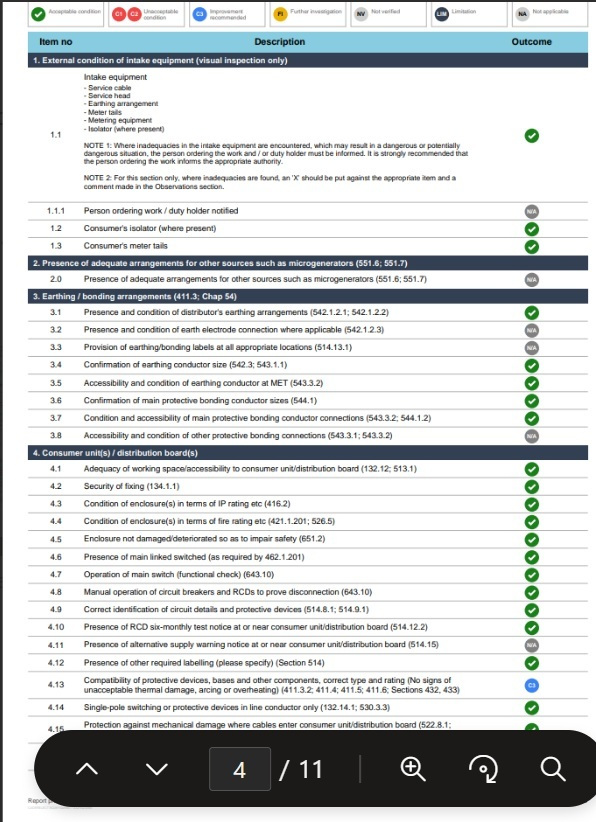
The report is produced using professional electrical certification software. It records the inspection and test results, identifies observations using recognised classification codes and provides a clear explanation of the findings.
Recorded information for the circuits and parts of the installation inspected.
Items requiring attention are recorded with the relevant classification.
Photographs may be included where they help explain a finding or limitation.
The findings and recommended next steps are explained without unnecessary jargon.
If an issue is identified, it is recorded using a recognised classification code. These codes explain the level of concern and the type of response normally required.
A report containing a C1, C2 or FI observation is normally assessed as unsatisfactory. The meaning of every observation recorded will be explained.
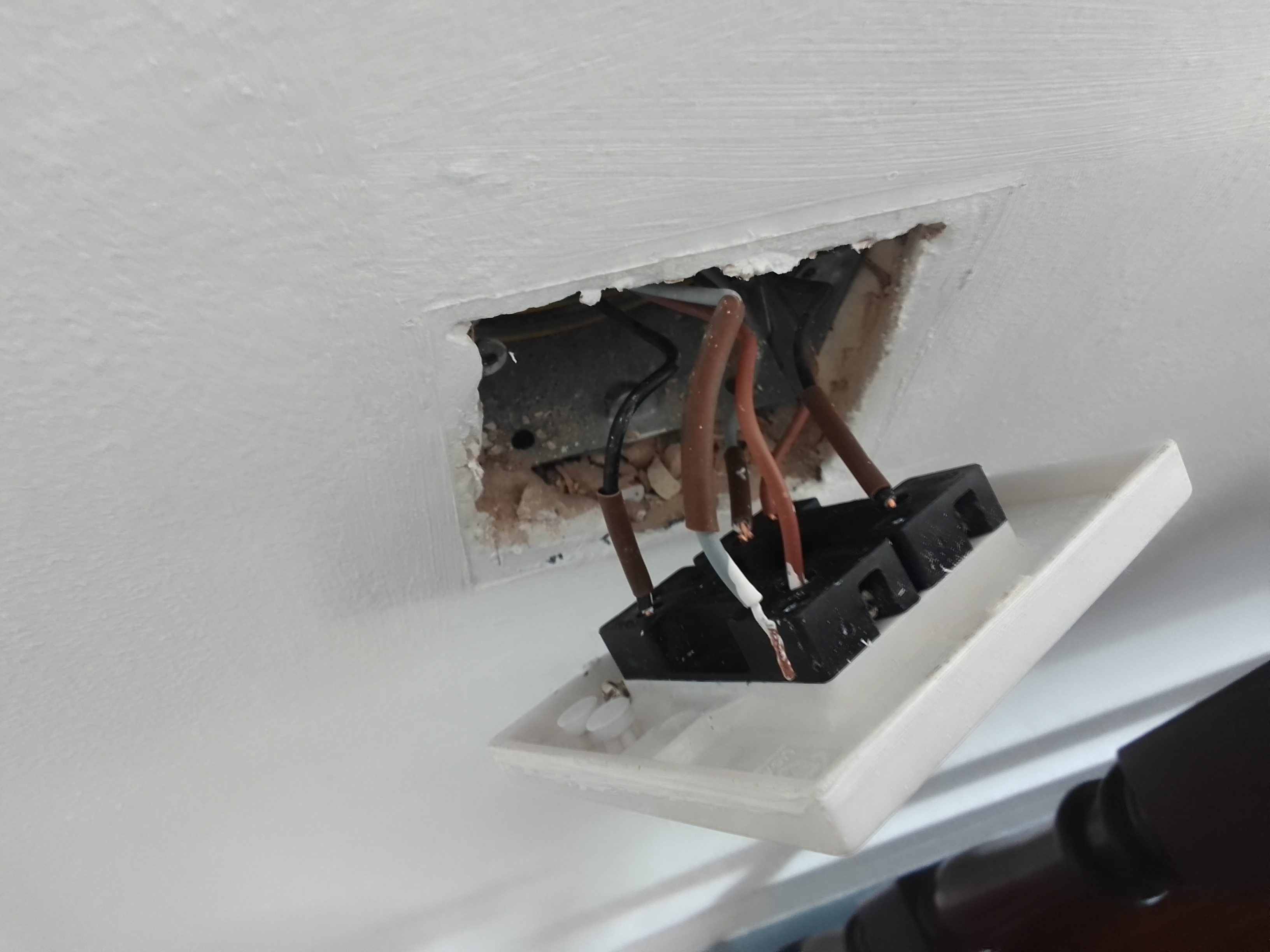
This internal light switch was reported as not working following decoration. Inspection found that a conductor had not been connected correctly and paint contamination was present around the termination.
The conductor was cleaned and safely re-terminated during the visit. Because the defect was corrected before the report was completed, the observation was recorded as resolved and no separate classification code or return visit was required.
Supporting photographs help explain what was found, what action was taken and whether any further work is recommended.
An older electrical installation is not automatically unsafe simply because it was installed to an earlier edition of the regulations.
Electrical safety standards have developed over time, introducing protective measures that may not have been required when the installation was originally completed.
An EICR helps establish the current condition of the installation and whether repair, improvement or further investigation is recommended.
The appropriate interval depends on the property, its use, the condition of the installation and any previous recommendations.
| Property or situation | Typical consideration | Typical maximum interval |
|---|---|---|
| Owner-occupied home | Consider following major alterations, concerns, changes of occupancy or where the installation has not been inspected for many years. | Up to 10 years |
| Private rented property | Subject to applicable landlord electrical-safety requirements and any earlier inspection date stated on the report. | Up to 5 years, or sooner if stated on the report |
| Shop, office or small commercial premises | Depends on use, environment, maintenance arrangements and the previous report. | Up to 5 years |
| Light industrial or workshop environment | Greater use, environmental conditions or risk may justify more frequent inspection. | Typically 3 years |
These periods are general starting guidance rather than a substitute for the recommendation recorded on a previous report or a property-specific assessment.
Select a question below to reveal the answer.
Send a brief description of the property, its approximate age, the number of consumer units, the reason for the inspection and any previous report date where known.